Hey everyone, and welcome back to the Billiard Accessories blog – where we break down all the nitty-gritty of gear that makes the difference between a good game and a great one. Today, I’m pulling back the curtain on a question I get at least a dozen times a week from both new players and seasoned regulars alike: Can I use billiard accessories on a snooker table? As someone who’s been supplying billiard accessories for over a decade, I’ve fielded everything from “Can I use my pool cue on a snooker table?” to “Will my pool chalk work on a full-sized table?” and honestly? The answer isn’t a simple yes or no. It depends on what accessory you’re talking about, and if you’re a regular reader, you know I like to get into the details that actually matter for your game. Billiard Accessories

First, let’s get one thing straight: while billiards, pool, and snooker are often lumped together as “cue sports,” they’re distinct games with their own rules, tables, and unique needs. A standard pool table is 9 feet long (for tournament play), while a full-sized snooker table is a massive 12 feet long – that’s 3 feet longer, for anyone counting. The pockets are smaller too: pool pockets are roughly 4.5 inches wide at the mouth, while snooker pockets are only about 3.5 inches, which means precision is non-negotiable. The balls are different, too: pool balls are 2.25 inches in diameter, and snooker balls are smaller, at 2.065 inches, with a much heavier cue ball (snooker cue balls weigh around 6 ounces, compared to pool’s 5.5 ounces). So when you’re talking about accessories, it makes sense that some cross over seamlessly, while others are a no-go. Let’s start with the most frequently asked accessory: pool cues on snooker tables.
If you’re a recreational pool player who decides to pick up snooker for the first time, your instinct might be to grab your old 58-inch pool cue and head to the snooker table. And honestly? For casual play, it works fine. But here’s the catch: snooker cues are shorter (usually 57 inches) and have a much thinner tip – 9mm to 10mm, compared to a pool cue’s 12mm to 13mm tip. Why does that matter? Snooker shots require more finesse, especially when you’re dealing with tight angles and gentle touches around the green and brown balls (those little fellas never seem to cooperate). A thicker pool cue tip can be too bulky for those delicate shots, making it harder to hit the exact center of the ball. It’s not that you can’t use a pool cue on a snooker table – but if you’re serious about getting better at snooker, investing in a dedicated snooker cue is worth the small cost. As an accessory supplier, I always tell new players: if you’re just messing around with friends, your pool cue will work. If you’re playing in a local snooker league or taking it seriously, swap to a thinner-tipped snooker cue.
Next up: chalk. This is where I get the most pushback from players who swear their pool chalk works perfectly on snooker. Let me explain. Pool and snooker chalk look almost identical – blue, sometimes a little darker blue for snooker, but the core composition is different. Pool chalk is formulated to provide maximum friction for hitting hard pool shots, like breaking and massés, which require a lot of spin. Snooker shots, on the other hand, are much more delicate; you rarely need heavy spin, and too much friction from the wrong chalk can actually throw your aim off. Here’s the practical test I do with customers who ask: grab a piece of pool chalk and a piece of snooker chalk, make the same soft, straight shot on both tables, and feel how much resistance you get on the tip. The pool chalk will cling more aggressively, leading to inconsistent hit. As a supplier, we stock both, and I always recommend snooker-specific chalk for anyone playing on a full-sized table. It’s not a hard rule, but it’s one that’ll save you from missed shots you can’t explain.
Now, let’s talk about accessories that actually work cross-sport, no questions asked. One of our top sellers that works on both pool and snooker tables is cue racks. Whether you’re storing three snooker cues or four pool cues, a quality wooden cue rack keeps your gear from getting scuffed or bent, and that’s universal. We also sell cue tips shapers, cleaning cloths, and bridge heads – all of these are designed to fit both table types, because they don’t interact with the table’s surface or the balls directly. Cue extension handles, too: if you’re struggling to reach a long shot on a snooker table, an extension that clamps onto the end of your pool cue works just as well as it does on a snooker cue. The key here is that these accessories are ancillary – they support the cue, not the table itself – so size and composition don’t change enough to matter.
But wait, what about accessories that shouldn’t cross over? Let’s get into the ones that can actually cause damage, because that’s a conversation few people have. For example, pool table felt: snooker felt is a lot denser and has a slower nap than pool felt. Pool felt is designed to be faster, so balls roll quicker, which works great on a shorter table. If you try to use pool felt on a snooker table, not only will the game feel off, but the faster nap will cause the smaller snooker balls to bounce more around the pockets, leading to way more missed shots. And here’s the big one: pool table brushes. Some players think a soft brush for pool felt will work on snooker felt, but snooker felt is made of finer wool, and a pool brush’s stiffer bristles can snag and pull fibers, leaving permanent marks on the table. We supply specialized snooker felt brushes, but if you only have a pool brush for a casual clean, just be extra gentle when brushing the table – don’t scrub hard. That’s a mistake that costs way more than buying the right brush, trust me.
I’ve had customers come to me with horror stories: they used a pool ball rack on a snooker table and the rack was too big, forcing them to cram the balls into the triangle, leading to warped shots. Or they used a pool cue ball on a snooker table, and the heavier ball made soft shots jump or skip across the felt. These are avoidable mistakes, and as someone who’s been in the accessory business for years, my goal is to help players make informed choices, not just sell them the most expensive thing. Let’s talk about a recent customer of mine: a guy who’d been playing snooker for two years, using his old pool cue, and was stuck at a 100 break (for non-snooker players, a break is when you pot every ball in a run). He came in looking for snooker chalk, and after we chatted, we suggested a snooker cue. Six months later, he emailed me to say he’d hit a 147, his first ever maximum break, and credited the thinner tip for his better control. That’s the kind of impact the right accessory makes.
Now, let’s address the elephant in the room: can you actually use a billiard accessory on a snooker table, full stop? The short answer is: most small, non-table-specific accessories work for casual play, but for serious, consistent play, you want to invest in gear designed for snooker. The difference comes down to precision. Snooker is a game of micro-adjustments – a 0.5mm shift in your tip placement can mean the difference between potting a black and missing it. Pool accessories are designed for bigger, more forgiving shots, so they don’t have the level of precision snooker needs.
Another point I get asked a lot: what about custom accessories? Some players build their own cues or modify their gear, and they want to know if they can adapt a pool accessory for snooker. For example, a cue case: a standard pool cue case is 58 inches, which is just an inch shorter than a snooker cue. You can squeeze a snooker cue into a pool case, but it’s going to be tight, and over time, the tight fit can bend the tip. So if you’re going to do that, look for a soft, padded case that gives a little, or just spring for a dedicated snooker case. It’s a small investment that protects your gear, and as someone who’s seen more than one bent cue tip from a too-tight case, I can’t stress that enough.
I also want to talk about table-specific accessories, because that’s where the line is most clear. Things like table covers, for example: a pool table cover is sized for a 9-foot table, so it’s way too small for a 12-foot snooker table. Trying to stretch a pool cover over a snooker table will just leave parts of the table exposed, which can lead to dust and dirt getting on the felt, ruining it faster. That’s a waste of money, and it’s a common mistake new players make when they first switch between games.
As a supplier, my approach is always to be honest with my customers, even if it means they buy a different accessory than they planned. I’d rather have a player come back next time because they know I gave them good advice, than sell them something that doesn’t work and lose their business. For example, last week a customer came in asking if our pool bridge heads would work on snooker tables. I told him they’d fit, but snooker bridge heads are a little narrower, so they sit better on the table’s side rails, which is important for those tight shots around the pockets. He ended up buying the snooker bridge heads, and came back a few days later to say the difference was night and day. That’s the feedback that keeps me doing this.
Let’s wrap this up with some actionable takeaways, because I know you guys want practical stuff you can apply today. First, for casual play with friends: most small billiard accessories (cue racks, cleaning cloths, extensions, even a pool cue) work fine on a snooker table, no problem. Second, for serious play or league matches: invest in snooker-specific chalk, a thinner-tipped snooker cue, and a snooker-specific brush for cleaning the felt. Third, never use pool table felt or pool table brushes on a snooker table – those can cause long-term damage to the table, which is way more expensive than any accessory. And finally, if you’re ever unsure, just reach out – that’s why we’re here.
At the end of the day, the question of whether you can use billiard accessories on a snooker table isn’t about right or wrong – it’s about getting the right tool for the job. I’ve played both pool and snooker my whole life, and the biggest mistake players make is thinking all cue sports gear is interchangeable. A snooker table is a precision instrument, and the accessories you use should match that precision to get the most out of your game.
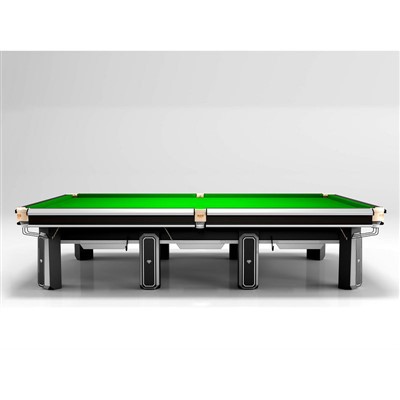
If you’re looking to upgrade your billiard or snooker accessories, or have more questions about what works for your game, don’t hesitate to connect with our team for personalized guidance. We’re here to help you play better, whether you’re a casual weekend player or a competitive league regular.
Pool Dawg Cues References
Snooker Cue Specifications and Performance. (n.d.). World Professional Billiards and Snooker Association.
Billiard Accessory Compatibility: Cross-Sport Use Cases. (n.d.). Billiard Industry Association.
Table Felt Composition and Maintenance for Cue Sports. (n.d.). International Billiards and Snooker Federation.
Shuai Zhanjiang (Dongguan) Co., Ltd.
As one of the leading billiard accessories manufacturers and suppliers in China, we offer a wide range of products with superior quality. Please rest assured to buy billiard accessories made in China here from our factory. We also accept customized orders.
Address: No. 50 Siyuan Road, Changping Town, Dongguan City, Guangdong Province
E-mail: cbibilliard01@gmail.com
WebSite: https://www.cbibilliard.com/
