Alright, let’s cut through the noise and talk about something that’s the backbone of every specialized vehicle out there: comms systems. For anyone who’s ever wondered how a fire truck stays connected to dispatch mid-race to a burning building, or how an off-road utility task vehicle (UTV) used in oilfields stays in touch with its crew 10 miles back in the woods—you’re not alone. As a special vehicle supplier, I get asked this question at least three times a week, usually by fleet managers or first responders who need to know their kit isn’t just “a radio stuck in a dashboard.” Let me break down how we equip these rigs, straight from the shop floor. Special Vehicle

First off, most people don’t realize that special vehicles aren’t built off a standard passenger car frame. We start with bare chassis—think heavy-duty pickup bases, stripped ambulances, or even those massive airport rescue trucks—and every system, including comms, is custom-tailored. No one-size-fits-all here. For example, a rural fire truck in Wyoming needs way different signal reach than a metro fire truck in Chicago, where you’re fighting through skyscraper concrete and subway tunnels. That’s why we don’t just slap in a consumer-grade Bluetooth radio and call it a day. We build for the job, not the showroom.
Let’s start with the core: the primary comms hub. For emergency vehicles (fire, EMS, police), it’s usually a mobile two-way radio—but not the cheap ones you’d buy for a backyard garage. We go for digital mobile radios (DMR) or P25 systems, which are standard for public safety in most places. Why? They don’t cut out when you’re near a metal building, and they have built-in encryption so no random person can listen in. Wait, but what about when a fire truck’s out in the middle of nowhere? We pair that primary radio with a satellite comms module—think Iridium or Globalstar, but we don’t just bolt on a box. We route the satellite antenna so it’s high on the roof, clear of any equipment ladders or pump panels, and we run the cable through the chassis frame so it doesn’t get snagged when the crew’s loading hoses. Last year, a client in Alaska told us their old satellite radio kept cutting out because the antenna was mounted low behind a tool box—we fixed that in the shop, and they haven’t had a dropout since. That’s the kind of detail no one sees, but it’s what keeps people safe.
Then there’s the crew comms side, because it’s not just the driver talking to dispatch. An ambulance has four people: driver, medic in the front, two EMTs in the back, sometimes a patient with them. How do they all talk without yelling over the siren or the ambulance’s engine? We install a vehicle intercom system that’s hardwired to each headphone/mic, with volume controls that automatically adjust for noise. When the siren’s on, it turns down the intercom’s background so you don’t blow out someone’s ear, but when you’re quiet in a residential neighborhood, it keeps the volume low so you can hear each other without disturbing residents. We also add push-to-talk (PTT) buttons on every door—so if an EMT’s leaning out the back of an ambulance while driving to the hospital, they can still talk to dispatch or the front crew without holding a radio the whole time. For off-road UTVs used in mining or forestry, it’s a bit more rugged. We use IP67-rated headsets that can take mud, water, and falls, and the intercom connects all 4-6 people in the vehicle, even when they’re wearing heavy gloves or fire-resistant gear. No more fumbling with buttons when you’re carrying a chainsaw or a first aid kit.
Wait, what about non-emergency special vehicles? Like the ones used for construction site surveying, or utility line maintenance? Their comms systems are way different, but no less important. A construction bucket truck operator (the one who fixes power lines) needs to talk to the crew on the ground, but also to their office to confirm part deliveries. We pair a business-grade cellular booster with a two-way radio—so if they’re in a valley where cell service is spotty, the radio handles short-range crew comms, and the booster kicks in when they get near a cell tower for office calls. We also add a GPS tracker that’s integrated into the comms hub—so the fleet manager can see exactly where the truck is, and if it’s moving when it’s supposed to be parked, or if it’s stuck somewhere. Last month, a utility client told us their old comms system didn’t have GPS, so they once spent 2 hours looking for a bucket truck that broke down on a back road—we added that tracker, plus a text-to-dispatch feature, and now the same issue took 15 minutes to resolve. That’s the kind of win that makes our job worth it.
Now, the behind-the-scenes stuff that most people don’t think about: integration and durability. A special vehicle’s dashboard is full of stuff—radios, GPS, pump controls, siren switches, defibrillator mounts. We can’t have a radio taking up half the dash, so we integrate it into the existing system. For example, on a fire truck, the radio’s controls are on the same panel as the siren lights, so the driver doesn’t have to look away from the road to switch from dispatch to crew comms. We also test every comms system in the shop before it leaves—we blast it with water (to simulate rain while driving through flood zones), we shake it on a vibration table to mimic off-road terrain, and we test the radio’s range in a field out of town to make sure it works where the client needs it. Last year, we had a client in the mountains who wanted their rescue UTV to work at 12,000 feet—most radios lose signal at high altitudes, but we paired a DMR radio with a high-gain antenna and tested it at 13,000 feet just to be sure. No shortcuts here.
Something else we’re adding now that’s huge: hybrid comms systems. A lot of clients are tired of paying for separate satellite, cellular, and radio plans, so we build systems that switch automatically between them. If you’re driving through a city with good cell service, it uses cellular to text dispatch and make calls. If you go into a tunnel, it switches to the two-way radio. If you’re out in the desert with no cell or radio signal, it flips to satellite. It’s seamless— the driver doesn’t have to touch a button. That’s the kind of tech we’re working on right now for oilfield UTVs, where you can drive 50 miles between pump stations with no cell service at all.
I get it, comms systems sound boring, but they’re the reason first responders get to a fire on time, why a utility crew doesn’t have to wait an hour for a part, why a rescue team can find someone lost in the woods fast. As a special vehicle supplier, we don’t just sell trucks—we build systems that keep people connected when they need it most.
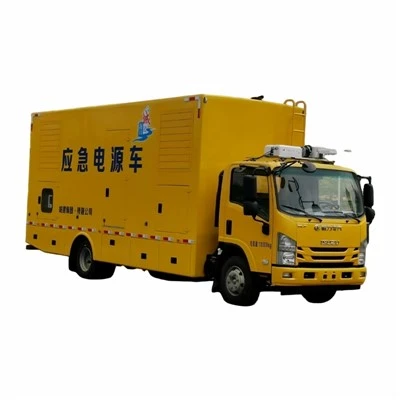
If you’re a fleet manager, emergency services lead, or someone who needs a custom special vehicle with a comms system that actually works for your job, hit us up to chat. We’ll walk through your needs, build a system that fits your vehicle and your budget, and test it until it’s perfect—no off-the-shelf junk, no hidden fees.
Mobile Healthcare Solutions References:
- Federal Communications Commission. (2022). Public Safety Communications Equipment Standards for Specialized Vehicles.
- International Organization for Standardization. (2021). ISO 14906: Road Vehicles – Electronic Communication between Vehicle and Infrastructure.
- National Fire Protection Association. (2020). NFPA 1901: Standard for Automotive Fire Apparatus, Chapter 10: Communications Systems.
- Global Industrial Equipment Association. (2023). Special Utility Vehicle Comms System Durability Testing Protocols.
Hubei Ruitu Technology Co., Ltd.
Hubei Ruitu Technology Co., Ltd. is one of the most experienced special vehicle manufacturers and suppliers in China, also supports customized service and OEM service. Welcome to buy advanced special vehicle made in China here and get pricelist from our factory. Also, 1 year warranty is available.
Address: Xingguang Road, Zengdu District, Suizhou City, Hubei Province
E-mail: Sales@ritumax.com
WebSite: https://www.ruitumotors.com/
