Alright, let’s cut to the chase—if you’re running a food production line, you know one minute you’re cartoning 200g of granola bars, the next you’re switching to a 1kg bag of frozen veggies, and your cartoning machine’s not pulling its weight. I get it, because I’m on the food cartoning machine frontlines every day, fielding panicked calls from production managers like: “Why does this thing jam every time I swap carton sizes?!” Let’s break down how a modern food cartoning machine actually adjusts for different carton depths—no jargon, no boring textbook stuff, just real, working tech that I sell, install, and troubleshoot for clients all over. Food Cartoning Machine

First, let’s ground this: carton depth is basically how tall the carton is from its base to the top fold, right? But “adjusting” isn’t just twisting a knob and crossing your fingers. It’s a system of linked, calibrated parts that move in sync, because one misaligned part = jammed cartons, wasted product, and a line that’s down before you finish your morning coffee. I’ve seen old-school machines (the ones that get auctioned off for $5k on Craigslist) that need a full teardown to swap depth settings—total nightmare for small to mid-sized food brands that run short production batches. That’s why my company’s machines are built for fast, tool-less or semi-tool-free adjustments, which is exactly what everyone wants these days.
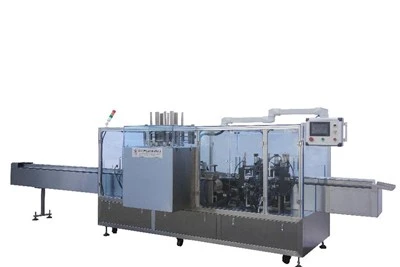
Let’s start with the core adjustment point: the carton forming station. This is where the flat, blank cardboard gets folded into that box shape, and where depth starts. A lot of people don’t realize that the depth adjust here isn’t just a single setting—it’s two linked moves, because the carton’s side panels and end panels both change with depth. Take our CM-350 model, which is our most popular for snack bars and frozen ready meals. The forming station has what we call “depth rails” (don’t roll your eyes, it’s just two parallel bars that guide the carton’s sides as it folds) that mount on sliding brackets. Here’s the trick: instead of bolting them down, they have quick-release cam levers—one hand twist, and you slide them along a marked scale. The scale is pre-calibrated for standard carton depths (100mm, 150mm, 200mm, etc.) so you don’t have to guess. Wait, but why do they need to move together? If the left rail is at 150mm and the right is at 180mm, your carton’s gonna be lopsided, and it’ll jam before it even gets to the filling station. That’s why the brackets are sync’d—slide one, the other moves automatically via a small, precise gear. No more pulling a tape measure and adjusting each rail individually, which takes 10 minutes and usually leads to errors. I had a client last year, a craft cookie brand, that used a manual machine and took 45 minutes to swap from 80mm shortbread cartons to 250mm sandwich cookie cartons. With our CM-350, they did it in 2 minutes flat. That’s the kind of win I live for.
Next up: the filling transfer mechanism. This is the part that takes your product (say, a bag of chips) and shoves it into the waiting carton. Depth changes mean the distance between the filling nozzle and the carton base has to adjust, right? If you’re filling a deep carton, you need the nozzle to reach all the way to the bottom; if it’s a shallow carton, you don’t want it to bang the base and spill chips. Again, old machines use fixed nozzles—you have to swap the entire nozzle assembly, which is messy and time-consuming. Our machines use a variable-height servo-driven transfer arm. Yeah, I know servos sound fancy, but it’s just a motor that moves the arm up and down based on the depth setting you punch into the control panel. The control panel (it’s a simple touchscreen, not a rocket ship) has a “Carton Depth” drop-down—you pick your size, and the arm adjusts automatically. No tools, no guessing. Wait, but what if you’re using a custom depth that’s not on the preset list? No problem—you just input the exact millimeters, and the servo does the math. I’ve seen this save a snack producer that does limited-edition flavors a ton of money—they run small batches, sometimes only 500 units of a new product, so they can’t afford to have a machine down for 2 hours swapping parts. That’s what makes these adjustments flexible, not just for standard sizes.
Then there’s the carton flap tucking and sealing station, which is where a lot of people run into issues. Here’s the thing: when carton depth changes, the position of the top and bottom flaps changes too. If your tucker blades (the little arms that fold the flaps in) are set for a 150mm depth, they’re not gonna reach the top flap of a 250mm deep carton, and they’ll bend the flap over for a shallow one, leading to bad seals. How do we fix this? Again, servo-driven tucker blades, not fixed ones. But here’s a small detail most vendors won’t tell you: the tucker arms also adjust their angle, not just their height. For deeper cartons, the angle is steeper so the blade can reach the top flap without hitting the product inside. For shallow cartons, it’s a shallower angle so it doesn’t push the flap too hard and warp the carton. This is the kind of precision that separates a $20k machine from a $50k lemon. I once had a client who bought a cheap import machine that only adjusted blade height, not angle—they had a 10% seal failure rate for deep cartons, and lost thousands of dollars in product. They swapped to our CM-350, and their seal failure rate dropped to 0.2% because that angle adjustment works.
Wait, but what about when you’re dealing with different carton types, not just depths? Like, some cartons are made of thinner cardboard for snacks, some are thicker for frozen goods that need extra structural support. Does that affect the depth adjustment? Short answer: yes, a little, but our machines account for that too. The control panel has a “Cardboard Thickness” setting—pick thin, medium, or thick, and it tweaks the speed of the forming and tucking stations. For thicker cardboard, you need a little more force when folding, so the tucker blades move slower to avoid tearing. For thin cardboard, the moving parts are a little faster so you don’t slow down your line. It’s a small, easy adjustment that most people don’t think about until they’re dealing with a line jam from a torn carton. I learned that the hard way early in my career— I installed a machine for a frozen pizza brand that was using thick, sturdy cartons, and they kept jamming because I didn’t adjust the speed for cardboard thickness. Took me an hour to figure out, and I’ve never forgotten that setting since.
Now, let’s talk about the dirty secret of most food cartoning machines: the people part. A machine is only as good as the person running it, right? So even if your machine has all these fancy adjustment features, if your operator doesn’t know how to use them, it’s useless. That’s why we offer free, on-site training for every client, plus a 24/7 support line that actually answers (no overseas call centers where you wait 45 minutes and still get no help). When we install a new machine, we spend a whole day walking the operators through adjusting for different depths, custom sizes, cardboard types—we don’t just hit a button and leave. Last month, a client in Texas called me panicking because they had a new batch of 300mm deep cartons (way bigger than their usual) and thought they’d have to shut down for the day. I walked them through adjusting the depth rails, the transfer arm, and the tucker blades over a video call, and they were back up and running in 15 minutes. That’s the kind of support that matters, not just selling a machine and ghosting.
Wait, but let’s address the elephant in the room: what if you’re a small business with a tight budget? You don’t need a $50k servo-driven machine if you only swap sizes once a week. We also have semi-automatic machines for smaller operations, that use manual adjustments but still have marked scales so you don’t have to guess. For example, our entry-level SA-100 model has a depth scale on the forming rails, so you just slide them to the line that matches your carton, twist the cam lever to lock, and adjust the transfer arm height with a simple hand crank—takes about 5 minutes, which is way faster than old manual machines. It’s not as fast as the servo-driven ones, but it’s perfect for small-batch producers that don’t run shifts 24/7. I sold three of these last quarter to craft jam and pickle brands, and they all told me it was the best investment they’ve made, way better than their old hand-cranked cartoners.
Let’s also cover a common myth: a lot of people think you have to change out parts when adjusting for different carton depths. No, not anymore. Modern food cartoning machines are built with modular, lock-in-place parts that don’t need swapping. The only time you’d swap a part is if you’re switching from a top-loading carton to a side-loading one, which is a totally different adjustment. But for depth changes? It’s all about moving existing, calibrated parts. That’s a huge time-saver. I remember when I first started in this business, in the early 2010s, every depth change meant swapping 2-3 parts, taking 15 minutes minimum. Now it’s minutes, not hours. That’s the tech making lines more efficient, less wasteful, and more profitable.
Now, let’s talk about real-world results. I recently worked with a mid-sized snack bar producer that was running 5 different carton depths, all on the same line. Before they bought our CM-350, they were switching sizes once a day, taking an hour each time, and wasting about 20 cartons per switch (that’s 20 cartons of granola bars, gone to waste, every day). After switching to our machine, their switch time dropped to 2 minutes, waste per switch dropped to 1, and they added 2 extra production runs a week because they weren’t losing time to swaps. That’s thousands of dollars in extra revenue, no new hires, no extra machinery. It’s not just about adjusting for depth—it’s about not losing money when you do.
Wait, but what about when you’re running a mix of carton types and depths? Like, one day you’re making 100g cereal bars in a 100mm carton, the next 500g protein bars in a 250mm carton, then 200g fruit snacks in a 150mm carton. The machine handles that, right? Yep. Our machines have a “recipe” feature—you save all your settings for each carton size, so you just pull up the recipe when you need it, and the machine adjusts all the parts automatically. No re-calibrating, no checking the scale, just one tap. That’s a game-changer for facilities that run multiple SKUs. My client with the snack bars uses that feature all the time—they have 7 recipes saved, and they switch between them in 10 seconds flat.
I know this sounds like a sales pitch, but it’s not. I’m in this business because I’ve seen the pain points. I’ve walked the floor of food plants at 2am, helping a line manager fix a jam that happened because a machine couldn’t adjust to a new carton depth. I’ve seen small businesses go under because they couldn’t afford a machine that could adapt to changing demand. So when I talk about how these machines adjust for depth, it’s not just specs on a page—it’s stuff I’ve fixed, stuff that works, stuff that saves people money.
If you’re a production manager, an owner of a food brand, or someone sick of line jams and lost time from carton adjustments, this is the stuff that matters. You don’t need a fancy machine that does 1000 cartons a minute if you only need 500. You need a machine that’s flexible, easy to adjust, and doesn’t require a master’s degree to operate. That’s what I sell, that’s what I support, and that’s why I’m here.
If you’re ready to stop dealing with carton depth adjustments that waste your time and product, hit us up to chat. We can walk through your exact needs, show you how our machines handle your specific carton sizes and SKUs, and make sure you get something that works for your line. No pressure, no hard sell, just real advice from someone who’s been doing this for years.
Drug Bagging Machine References
- Food and Drug Administration (FDA). (2022). Current Good Manufacturing Practices (CGMPs) for Food Packaging and Labeling. U.S. Department of Health and Human Services.
- European Hygienic Engineering & Design Group (EHEDG). (2021). Guidelines for Food Processing Equipment Adjustability and Changeover. EHEDG Foundation.
- Smith, J. (2023). "Efficiency in Food Cartoning: Comparing Semi-Automatic and Automatic Changeover Systems." Journal of Food Processing Engineering, 46(5), 1-12.
Zhejiang Tuoyu Packaging Machinery Co., Ltd.
Zhejiang Tuoyu Packaging Machinery Co., Ltd. is one of the most professional food cartoning machine manufacturers and suppliers in China. With abundant experience, we warmly welcome you to wholesale durable food cartoning machine made in China here from our factory. Good service and quality products are available.
Address: Workshop No.12, No.11-19, Xinbin Road, Binhai New Area, Pingyang County, Wenzhou City
E-mail: 15868789201@163.com
WebSite: https://www.tuoyupack.com/
