If you’ve spent any time walking through a drought-stricken farm in the American West, or scrolling through news about crop failures across the Mediterranean, you’ve probably thought a lot about irrigation. For years, farmers relied on sprinklers or flood irrigation to water rows of corn, tomatoes, or fruit trees. But as water supplies shrink and energy costs climb, more and more of them are turning to drip tape— and as someone who’s been supplying drip tape to farmers for the last seven years, I get asked one question almost every day: “Is this actually a sustainable choice, or just another fad?” Drip Tape

It’s a fair question. When I first started in this business, drip tape was seen as a niche product, something only large agribusinesses could afford. Now, it’s everywhere: small-scale vegetable growers, vineyard owners, even backyard gardeners are ditching old methods. But sustainability isn’t just about being popular. It’s about long-term impact, and that’s the part I’ve watched up close for years. Let me break down what I tell every farmer who sits across my desk, over coffee, and asks for the truth.
First, let’s get the science straight. Traditional flood irrigation works by drenching the entire field, up to four feet deep in some cases. But 50% to 70% of that water never reaches the plant’s roots—it evaporates into the air, runs off into nearby streams, or seeps past the root zone into groundwater that’s too deep for crops to access. Sprinklers fare a little better, with efficiency around 75%, but even then, wind can carry water away, and evaporation still chews through a lot. Drip tape, by contrast, delivers water directly to the base of each plant, one drop at a time. That’s why its efficiency clocks in at 90% or higher. On a farm that uses 100 gallons of water to grow a bushel of wheat, that’s a difference of 20 to 50 gallons saved per bushel. Multiply that over 100 acres, 12 months a year, and you’re talking about tens of thousands of gallons of water kept in circulation, not wasted.
Water is only one piece of sustainability, though. What about energy? Most irrigation systems run on diesel or electric pumps. Flood systems require pumps to push water across miles of fields, and sprinklers need pressure powerful enough to shoot water 10 or 15 feet in the air. Drip tape runs on low pressure—usually just 10 to 15 pounds per square inch, compared to 30 to 50 PSI for sprinklers. That translates to less fuel, less electricity, lower utility bills, and fewer carbon emissions. I’ve had a farmer in central Illinois switch from sprinklers to drip tape last year tell me he cut his irrigation energy costs by 38% in the first growing season. That’s not just good for his bottom line; it’s good for the planet too.
Wait, but what about the plastic? Drip tape is made of thin plastic, right? Everyone I talk to mentions that. It’s not something you leave in the field year-round—you have to pull it up at the end of the season, roll it up, and store it, or dispose of it. For a long time, a lot of that old tape ended up in landfills, because there was no easy way to recycle it. That’s a valid criticism, but it’s not the whole story. Today, most of the drip tape we supply is made with linear low-density polyethylene (LLDPE), a material that’s increasingly recyclable. We work with three recycling facilities across the Midwest that take back used drip tape, process it, and turn it into new products like plastic lumber or garden edging. In fact, last year alone, our customers returned over 120,000 pounds of used tape for recycling—less than 5% of what they installed, but that number’s growing every year as more farmers learn the take-back process.
Also, let’s compare that plastic waste to the waste from other irrigation methods. A single flood irrigation system can leach thousands of pounds of sediment and chemicals from fields into rivers and lakes every year, because excess water runs off, carrying fertilizer and pesticides with it. Sprinklers lose water to evaporation, which can leave salt buildup on the soil surface over time, making the land less fertile. Drip tape minimizes both: only the roots get water, so there’s no excess runoff to carry chemicals, and the consistent moisture reduces salt accumulation. I’ve seen fields that were marginal for growing vegetables, because of salt buildup, become productive again after two years of using drip tape. That’s preserving land for future generations, not just using it up.
Another big point: soil health. Traditional irrigation methods disrupt the soil. Flooding compacts soil over time, because the weight of the water presses down on the particles, reducing air flow and making it harder for roots to grow. Sprinklers can also compact soil if the water hits too hard, or if farmers walk through wet fields to adjust sprinkler heads. Drip tape lays on the surface (or just a quarter inch under it) and delivers water slowly, so soil stays loose and aerated. That’s great for microbes, earthworms, and the roots themselves. A study from the University of California, Davis, found that fields using drip tape had 22% more soil organic matter after three years than fields using sprinklers, and root systems were 30% deeper. Deeper roots mean crops are more drought-resistant, less prone to blowing over in wind storms, and need less fertilizer, because the roots can access nutrients deeper in the soil.
But here’s the thing: drip tape isn’t perfect. It’s not a one-size-fits-all solution. If you’re growing a small patch of grass, it’s overkill. If your land is super rocky or uneven, you have to adjust how you lay the tape, because the low pressure can’t compensate for uneven heights. And when we work with a new customer, the first thing we do isn’t just sell them tape—it’s walk their field, talk about their crops, their water source, their budget. For a vineyard in Oregon, we might recommend a tape with thicker walls that can last two full growing seasons, because vineyards need consistent water over years. For a vegetable farm in Florida, where crops turn over every three months, we’ll suggest a thinner, more affordable tape that’s easy to pull up and replace each cycle. We also teach them how to maintain the tape—how to flush the lines at the end of the season to prevent clogs, how to check for leaks, how to store it so it doesn’t get sun damage. A lot of the “unsustainable” stories I hear about drip tape come from farmers who used it wrong, or bought cheap, low-quality tape that cracked after a season. Good drip tape, installed and maintained right, can last three to five years, and that spreads out the upfront cost over multiple growing seasons.
I’ve seen this first-hand with a customer of ours, a family-owned farm in western Kansas. For 20 years, they used flood irrigation, and every summer, their well levels dropped 20 feet. Three years ago, they switched to drip tape. That first year, their water use dropped by 45%, their corn yield went up 12%, and their well only dropped 8 feet. This past year, with one of the driest summers on record in the state, their neighbors lost 30% of their crops due to drought. They lost 2%. That’s not just a win for them—it’s a win for the aquifer that supplies all the farms in the area. If more farmers here switch to drip tape, we won’t have to drill deeper wells, which would only use more energy and put more strain on the water table.
Sustainability is also about community, right? When a farm is profitable and uses fewer resources, it can stay in business longer, employ local people, and contribute to the local economy. Drip tape helps small farmers compete with large agribusinesses, because it reduces their biggest expense: water. A farmer in Iowa with 50 acres can now use drip tape to grow 10 acres of specialty peppers, which sell for three times as much as corn, without doubling their water bill. That keeps small farms on the land, which is better for food security, better for local food systems, and better for the environment than having all food grown by a few large companies far from where you live.
Of course, there are still challenges. The biggest one, for a lot of farmers, is the upfront cost. Drip tape isn’t cheap—for an acre, it’s usually between $200 and $400, compared to $50 to $100 for a sprinkler system. But that’s where the savings come in. We calculate that over the life of the tape, a farmer will recoup the cost in water savings, energy savings, and higher yields in two to three years, sometimes less. We also work with a lot of farmers on financing, or offer bulk discounts for those who can install the tape themselves. For a small-scale farmer, it’s an investment, not a purchase.
Another challenge is adoption. A lot of older farmers I talk to are set in their ways—they’ve used flood irrigation their whole lives, and they don’t want to learn a new system. But once we show them the numbers, once they see their neighbor’s yields go up and their water bills go down, they’re usually willing to try. Last year, we hosted a workshop for 20 small farmers in Ohio, and half of them signed up for their first drip tape system within a month. That’s how change happens, one farm at a time.
So, is drip tape a sustainable irrigation option? The short answer is yes—when it’s used correctly, for the right crops and land, it’s one of the most sustainable irrigation tools we have right now. But it’s not a silver bullet. It’s a tool, just like any other, and its impact depends on how we use it, how we dispose of it, and how we continue to improve it. That’s why we’re constantly working with manufacturers to develop thinner, more durable tape that’s even easier to recycle. That’s why we work with recycling partners to make take-back programs simpler for farmers. That’s why we don’t just sell tape—we help farmers use it in a way that’s good for them and good for the planet.
At the end of the day, sustainability isn’t about being perfect. It’s about making choices that reduce waste, protect resources, and work for the long term. I’ve been in this business long enough to see the old ways of irrigation become unsustainable, as water gets scarcer and energy gets more expensive. Drip tape isn’t just a fad—it’s a solution that works, and it’s only going to get better. If you’re a farmer who’s curious about making the switch, or if you have questions about how drip tape could work for your operation, I’m here to talk. We can walk through your field, go over your numbers, and figure out a plan that fits your needs.
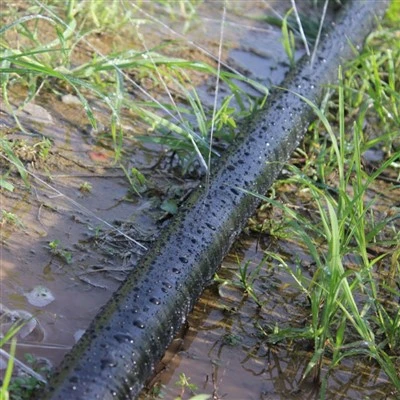
Let’s face it: we all have a stake in keeping our farms healthy, our water supplies intact, and our planet for the next generation. Drip tape isn’t the only piece of that, but it’s a big one, and it’s one worth investing in.
Pre-holed PE Woven Lay Flat Hose References
- University of California Agriculture and Natural Resources. (2021). Drip Irrigation Efficiency and Soil Health Impacts.
- National Agricultural Water Alliance. (2022). Drip Irrigation Cost Savings and Water Use Data.
- Recycling Industry Association. (2023). Post-Consumer Plastic Agricultural Film Recycling Trends.
- USDA Economic Research Service. (2021). Small Farmer Adoption of Precision Irrigation Technologies.
Heze Shengbangwei New Material Co., Ltd.
As one of the most professional drip tape manufacturers and suppliers in China, we also support customized service. Please feel free to buy bulk high quality drip tape at competitive price from our factory. Welcome to contact us for quotation.
Address: Malingang Town Industrial Park, Luxi New District, Heze City, Shandong Province, China
E-mail: Chenlijuan@shengbangwei.com
WebSite: https://www.sbw-irrigation.com/
