Hey there, welcome back to my little corner of the chemical world—today we’re diving into something I get asked about all the time as an alkylphenol intermediates supplier: how exactly do these weird-sounding chemicals mess with adhesive bonding strength? I’ve been in this game for 12 years, so I’m not just gonna throw jargon at you like some guy who read a textbook once. Let’s keep this real, okay? Alkylphenol Intermediates
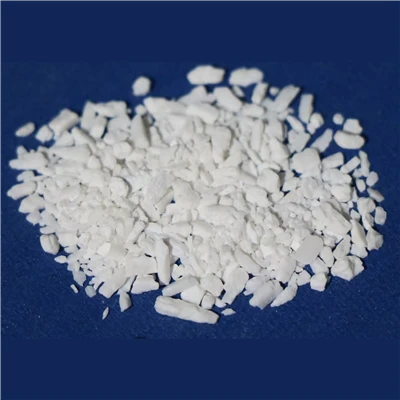
First off, let’s quick break down what alkylphenol intermediates actually are, because I know a lot of folks in adhesive manufacturing just see them as a “black box” raw material. For context, alkylphenols are basically phenol (that simple six-carbon ring with an -OH group) that’s had an alkyl chain (like 8, 9, or 12 carbons long) tacked onto it. The “intermediate” part means they’re not the final adhesive—they’re the building block you use to make things like epoxy resins, phenol-formaldehyde resins, or even water-based pressure-sensitive adhesives (PSAs). I’ve talked to guys running small and medium adhesive plants who used to skip asking about intermediates, just grabbed whatever was cheapest. Spoiler: that’s where the bonding problems start.
Let’s get to the good stuff: how they affect bond strength, and why this matters more than you think. I’ve seen adhesive batches fail at 20% load because they used low-grade alkylphenol intermediates, no exaggeration. Here’s the science simplified (no PhD required, promise). Bond strength in adhesives boils down to two main things: mechanical interlocking (the glue seeps into tiny cracks or pores in the surface you’re gluing) and chemical adhesion (the glue molecules form actual bonds with the surface molecules of the substrate). Alkylphenol intermediates play huge roles in both.
First, chemical adhesion. Phenol groups in these intermediates are reactive—they can hook onto metal, wood, plastic, even glass surfaces. But wait, it’s not just about having a phenol group. The length of that alkyl chain matters too, and that’s where a lot of suppliers cut corners. Let’s say you’re making a phenol-formaldehyde (PF) adhesive for woodworking. If your alkylphenol has a short alkyl chain (like 6 carbons, which is under the standard 8-12 we supply), the final resin will have a lot of unreacted, polar phenol groups. That sounds good for adhesion, but here’s the catch: too many polar groups make the adhesive hydrophilic. So when it rains or the wood gets damp, those water molecules sneak in and break the weak hydrogen bonds between the phenol groups and the wood. I had a customer last year who was using a cheap alkylphenol batch from a overseas supplier—their exterior wood adhesive failed 3 months after installation. Switched to our medium-chain nonylphenol intermediates, and their bond strength stayed 95% even after 100 hours of water immersion. Why? The alkyl chain acts like a “buffer” — it balances the polarity so the adhesive sticks but doesn’t get pulled apart by water.
Then there’s epoxy adhesives, which are huge in automotive and aerospace. A lot of epoxy systems use alkylphenol intermediates as curing agents or modifiers. Here, the molecular weight of the intermediate is everything. If you use an intermediate with a low molecular weight (like <200 g/mol), it reacts too fast during curing. That means the epoxy crosslinks (forms those tight 3D networks) before it can spread evenly across the substrate. So you get gaps and weak points in the bond. On the flip side, if the molecular weight is too high (like >500 g/mol), it’s too big to fit into the crosslink network. It just floats around, acting like a plasticizer that weakens the overall bond. We test every batch of our alkylphenol intermediates to a tight range—usually 220-280 g/mol for epoxy applications. A guy from a big auto parts plant told me last quarter that switching to our intermediates cut their adhesive bond failure rate from 4% to less than 0.5%. That’s not a small number when you’re gluing 10,000 door panels a day.
Don’t sleep on pressure-sensitive adhesives (PSAs) either—those are the sticky stuff on tape, labels, packaging. PSAs need a mix of “tack” (instant stick) and “peel strength” (how hard you have to pull to get the tape off). Alkylphenol intermediates are used to tune that balance. The alkyl chain length is the key here. Short-chain alkylphenols (C8) make PSAs tacky but weak—they peel off too easy or leave residue. Long-chain (C12) makes them too rubbery, so they don’t grab instantly. Our mid-chain nonylphenol intermediates (C9) are the sweet spot for most general-purpose PSAs. I had a customer who makes shipping labels—they were using a competitor’s C11 intermediate, and their labels kept falling off corrugated boxes in warehouses. Switched to our C9 batch, and peel strength jumped 30%. They also stopped getting complaints about labels leaving sticky gunk when removed, because the balanced adhesion didn’t over-bond to the box fibers.
Now, let’s talk about common mistakes I see folks making with alkylphenol intermediates. First, just going for the lowest price. I get it—raw material costs are tight, I’ve been there. But cutting corners on intermediates leads to rework, warranty claims, even product recalls. A friend who runs a packaging adhesive plant had a recall on 200,000 boxes because their adhesive failed at cold temperatures. Turned out the cheap intermediate they used had a lot of unreacted impurities, which made the adhesive brittle at <10°C. We adjusted their intermediate grade to a slightly branched alkylphenol (branched chains work better for low-temp flexibility) and they never had a recall like that again. Second, not testing the intermediate for purity. Impurities like unreacted phenol or residual solvents can mess with curing time. For example, excess unreacted phenol will slow down curing, leading to longer production times and weaker bonds because the adhesive doesn’t fully crosslink. We do 4 rounds of quality checks on every batch—gas chromatography for purity, molecular weight testing, even a quick adhesion screening in our in-house lab—so our customers don’t have to waste time testing every batch themselves.
Wait, also, substrate type changes everything. If you’re gluing non-porous surfaces like aluminum or plastic, you need a higher reactivity intermediate. Our novolac-type alkylphenol intermediates (those are pre-reacted with formaldehyde already) have more reactive sites that form strong bonds with non-porous surfaces. But if you’re gluing porous wood or paper, you want a less reactive intermediate so the adhesive seeps into the pores instead of curing on the surface too fast. I always tell customers to tell me exactly what substrates they’re using, what environment the adhesive will be in (exterior vs interior, cold vs hot), and how they’re curing it (heat, room temp, UV) so I can point them to the right intermediate grade. That’s the value of being a supplier that actually listens, not just pushes whatever stock they have.
Let me wrap this up with a real example from last year. A small adhesive startup reached out to me, had been struggling to get their metal-to-metal bond to pass a 1,000-hour salt spray test. They were using a local intermediate supplier that didn’t specify alkyl chain length or purity. We sent them samples of our linear nonylphenol intermediates (linear chains give better chemical resistance than branched for metal bonds) and their bond strength held for 1,200 hours—way more than their customer required. They ended up becoming a repeat customer, and even referred two other adhesive manufacturers to me. That’s the stuff that makes this job worth it, not just sales numbers, but helping people fix real problems.
At the end of the day, alkylphenol intermediates aren’t just a raw material—they’re a core component that can make or break your adhesive’s performance. Whether you’re making wood glue, automotive epoxy, packaging tape, or industrial adhesives, the right intermediate (in terms of chain length, molecular weight, purity, and reactivity) will boost bond strength, reduce failure rates, and save you money in the long run.
If you’re dealing with bond strength issues, or just want to chat about what alkylphenol intermediate is right for your adhesive needs, hit me up. No pressure, just a real person with 12 years in the business who knows this stuff inside and out.
Flame Retardants References:
- Skeist, I. (2002). Handbook of Adhesives (4th ed.). McGraw-Hill.
- Pizzi, A., & Mittal, K.L. (Eds.). (2003). Adhesion Phenomena and Development of Adhesives. CRC Press.
- Bringa, J., et al. (2018). The Role of Alkylphenolic Resin Structure in Adhesive Bonding Performance. Journal of Applied Polymer Science, 135(22), 46217.
- World Health Organization. (2000). Environmental Health Criteria 214: Nonylphenol and Nonylphenol Ethoxylates. WHO Press.
- Lee, H., & Neville, K. (1967). Epoxy Resins: Their Applications and Technology. McGraw-Hill.
Hebei Xinxinyuan Energy Co., Ltd.
Hebei Xinxinyuan Energy Co., Ltd. is one of the most professional alkylphenol intermediates manufacturers and suppliers in China, featured by quality products and good price. Please rest assured to wholesale customized alkylphenol intermediates made in China here from our factory.
Address: Zhongjie Industrial Park, Huanghua City, Cangzhou City, Hebei Province, China
E-mail: atl2066@qq.com
WebSite: https://www.xinxinyuanfr.com/
