Hey there! I’m a supplier of Babbitt journal bearings, and I’ve been in this industry for quite a while. One question that often pops up from our customers is, "What are the cost factors of Babbitt journal bearings?" Well, let’s dive right in and break it down. Babbitt Journal Bearings

Material Costs
First off, the materials used in Babbitt journal bearings play a huge role in the overall cost. Babbitt metal itself is a key component. It’s an alloy, usually made up of tin, antimony, and copper. The price of these raw materials can fluctuate a lot based on market conditions.
For example, tin is often in high demand for various industries, not just bearing manufacturing. If there’s a shortage in the global tin supply, the price goes up. And since tin is a major part of Babbitt metal, that means the cost of making the bearings also increases. The same goes for antimony and copper.
The quality of the Babbitt metal also matters. Higher – quality alloys with more precise compositions and better purity levels are generally more expensive. These better – quality Babbitts have improved properties like better wear resistance and lower friction coefficients, which are great for the performance of the bearings. But they come at a cost.
On top of the Babbitt metal, there’s the base material for the bearing. Usually, it’s steel. The grade and quality of the steel can vary. High – strength steels with good hardness and toughness are often used for heavy – duty applications. These steels are more expensive than standard ones. And if the bearing needs special surface treatments or coatings on the base steel to improve corrosion resistance or adhesion of the Babbitt metal, that’ll add to the cost too.
Manufacturing Processes
The way Babbitt journal bearings are made is another big factor in the cost. There are several manufacturing steps involved, and each one can carry its own price tag.
Casting is one of the primary methods for applying the Babbitt metal to the base material. The casting process requires precise temperature control and skilled labor. If the casting process isn’t done right, it can lead to defects like porosity or uneven distribution of the Babbitt metal, which can ruin the bearing. So, a well – controlled casting operation requires good equipment and experienced workers, both of which cost money.
Machining is also crucial. After the Babbitt metal is cast onto the base, the bearing needs to be machined to the correct dimensions and surface finish. This involves operations like turning, grinding, and boring. The more complex the bearing’s shape and the tighter the tolerances required, the more difficult and time – consuming the machining process will be. And you know what that means – higher costs.
Some bearings may also require heat treatment. Heat treatment can improve the mechanical properties of the bearing, such as hardness and toughness. But it’s an energy – intensive process, and the cost of energy is a significant part of the overall cost of heat treatment. Plus, there’s the cost of the heat – treating equipment and the expertise needed to control the process.
Design Complexity
The design of the Babbitt journal bearing can have a big impact on its cost. Simple, standard – sized bearings are generally cheaper to produce. They can be made using standard manufacturing tools and processes, and there’s less need for custom – made equipment or special set – ups.
However, if a customer needs a bearing with a unique design, things get more expensive. For example, a bearing with a non – standard shape, like an oval or a multi – lobe design, requires special tooling and machining operations. These custom designs often need more engineering work to ensure they meet the performance requirements. The engineers have to spend time on calculations, simulations, and testing, all of which add to the cost.
Bearings with special features also cost more. For instance, a bearing with built – in lubrication channels or sensors for monitoring temperature and vibration. These additional features require more complex manufacturing processes and more expensive components, so the price of the bearing goes up.
Quantity and Order Volume
The quantity of bearings ordered by a customer can have a significant effect on the cost per unit. When a customer places a large – volume order, we can take advantage of economies of scale.
For one thing, we can buy the raw materials in bulk. Suppliers usually offer discounts for large – quantity purchases of tin, copper, and other metals. This reduces the cost of the raw materials per unit of bearing.
In terms of manufacturing, setting up the production line for a large order is more cost – effective. The initial setup costs, such as tooling and equipment calibration, can be spread over a large number of bearings. So, the cost per bearing is lower.
On the other hand, small – volume orders are more expensive per unit. The setup costs are the same whether we’re making 10 bearings or 1000. And we may not be able to get the same discounts on raw materials. So, the cost per bearing for small orders is relatively high.
Quality Control and Testing
Quality control is essential in the production of Babbitt journal bearings. We need to make sure that every bearing meets the required quality standards. This involves a series of tests and inspections.
Non – destructive testing methods, like ultrasonic testing and magnetic particle testing, are used to detect internal and surface defects in the bearing. These tests require specialized equipment and trained operators. The cost of the equipment, the calibration of the equipment, and the labor for conducting the tests all add to the overall cost of the bearing.
We also perform performance testing on the bearings. This includes testing for factors like friction, wear, and load – carrying capacity. These tests are time – consuming and may require expensive testing equipment. The cost of running these tests and analyzing the results is included in the price of the bearing.
Market Conditions and Competition
The market conditions and the level of competition in the industry can also affect the cost of Babbitt journal bearings. If the demand for bearings is high and the supply is limited, the prices will tend to go up. This is basic economics.
On the other hand, if there’s a lot of competition among bearing suppliers, we may have to offer more competitive prices. We might cut our profit margins to win customers. But at the same time, we still need to cover our costs, so we have to find ways to be more efficient in our production processes or source materials at lower prices.
Conclusion
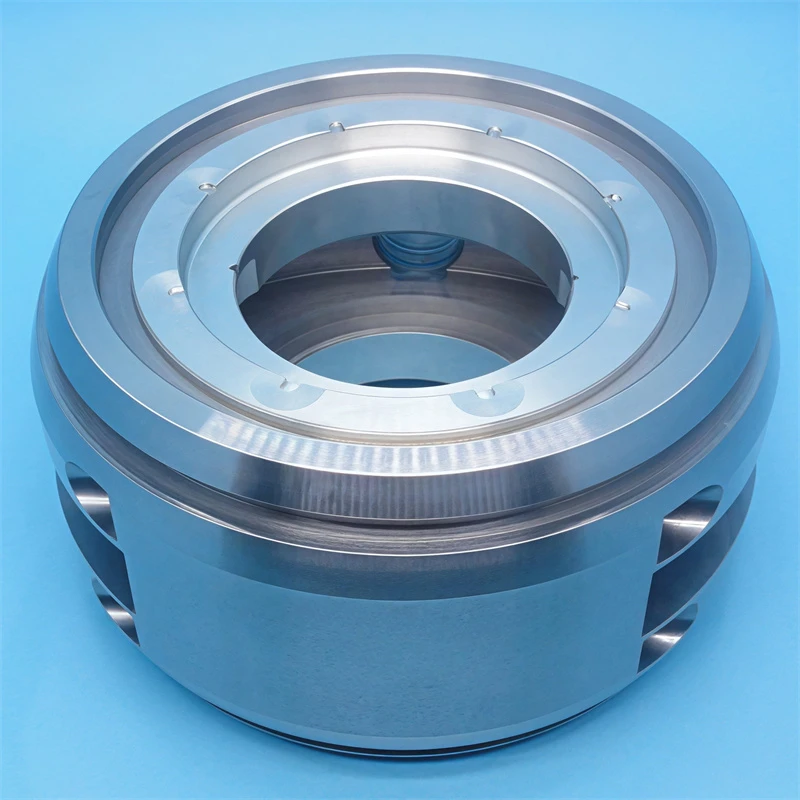
So, as you can see, there are many factors that go into the cost of Babbitt journal bearings. From the materials used to the design complexity, manufacturing processes, quantity ordered, quality control, and market conditions, each aspect plays a role.
Fluid Film Bearings If you’re in the market for Babbitt journal bearings and want to discuss your specific requirements, I’d love to have a chat with you. Whether you need standard bearings or custom – designed ones, we can work together to find the best solution for your needs. We’ll take into account all these cost factors and see how we can provide you with high – quality bearings at a reasonable price. Don’t hesitate to reach out and start the procurement process with us. Let’s have a great partnership!
References
- Smith, J. (2018). "The Basics of Bearing Manufacturing." Machinery Publishing.
- Johnson, A. (2019). "Materials and Their Impact on Bearing Cost." Engineering Journal.
- Brown, M. (2020). "Design Considerations for Babbitt Journal Bearings." Industrial Design Magazine.
Wenzhou Zhengbang Bearing Co., Ltd.
We are one of the most professional babbitt journal bearings manufacturers and suppliers in China. With abundant experience, we warmly welcome you to buy customized babbitt journal bearings at competitive price from our factory. If you have any enquiry about free sample, please feel free to email us.
Address: Units 1-1 and 3-1, Building 12, Yongxing Nanyuan Small and Micro Enterprise Startup Park, Binhai 2nd Road, Yongxing Subdistrict, Longwan District, Wenzhou City, Zhejiang Province.
E-mail: zbbearing@zbbearing.com
WebSite: https://www.zb-bearings.com/
