As a supplier of self-cleaning solar street lights, I’ve witnessed firsthand the remarkable synergy between the self-cleaning function and solar panels. In this blog, I’ll delve into the science behind this interaction, exploring how it enhances the performance and longevity of solar street lights. Self-cleaning Solar Street Light

The Importance of Clean Solar Panels
Solar panels are the heart of solar street lights, converting sunlight into electricity. However, their efficiency can be significantly hampered by dirt, dust, bird droppings, and other debris. Even a thin layer of grime can reduce the amount of sunlight reaching the photovoltaic cells, leading to a decrease in power output. According to research, a dirty solar panel can experience a power loss of up to 25%.
Regular cleaning is essential to maintain the optimal performance of solar panels. However, manual cleaning can be time-consuming, costly, and in some cases, dangerous, especially for street lights installed in high or hard-to-reach locations. This is where the self-cleaning function comes in.
How the Self-Cleaning Function Works
The self-cleaning function in our solar street lights is based on a combination of advanced materials and innovative design. There are two main types of self-cleaning technologies commonly used: hydrophobic and photocatalytic.
Hydrophobic Coating
Hydrophobic coatings are designed to repel water, causing it to bead up and roll off the surface of the solar panel. This not only helps to remove dirt and debris but also prevents water from leaving behind streaks or stains. The hydrophobic coating is typically applied to the surface of the solar panel during the manufacturing process, creating a smooth and water-repellent barrier.
When it rains, the water droplets on the solar panel’s surface quickly form into large beads, which then roll off, taking the dirt and debris with them. This natural cleaning process is highly effective in removing loose particles and keeping the solar panel clean.
Photocatalytic Coating
Photocatalytic coatings are another type of self-cleaning technology used in our solar street lights. These coatings contain titanium dioxide (TiO2), which is a photocatalyst that can break down organic matter when exposed to sunlight.
When sunlight hits the photocatalytic coating, it activates the titanium dioxide, causing it to react with oxygen and water in the air. This reaction produces hydroxyl radicals, which are highly reactive and can break down organic pollutants, such as dirt, dust, and bird droppings. The breakdown products are then washed away by rain or wind, leaving the solar panel clean.
In addition to its self-cleaning properties, the photocatalytic coating also has antibacterial and antifungal properties, which can help to prevent the growth of algae and other microorganisms on the solar panel’s surface.
The Interaction between the Self-Cleaning Function and Solar Panels
The self-cleaning function and solar panels work together in a symbiotic relationship, each enhancing the performance of the other.
Improved Efficiency
By keeping the solar panel clean, the self-cleaning function ensures that more sunlight reaches the photovoltaic cells, increasing the power output of the solar panel. This not only improves the efficiency of the solar street light but also reduces the need for additional solar panels, saving costs and space.
Extended Lifespan
Dirt and debris can cause damage to the surface of the solar panel over time, leading to a decrease in its lifespan. The self-cleaning function helps to prevent this damage by removing the dirt and debris before it can cause any harm. This extends the lifespan of the solar panel, reducing the need for frequent replacements and saving money in the long run.
Reduced Maintenance
Manual cleaning of solar panels can be a time-consuming and costly process. The self-cleaning function eliminates the need for regular manual cleaning, reducing maintenance costs and freeing up resources for other tasks. This makes our solar street lights a more cost-effective and convenient solution for outdoor lighting.
Real-World Applications
The self-cleaning function has been widely adopted in our solar street lights, and the results have been impressive. In a recent case study, we installed a series of self-cleaning solar street lights in a busy urban area. After six months, we conducted a performance evaluation and found that the power output of the solar panels had remained consistently high, with no significant decrease in efficiency.
The self-cleaning function also helped to reduce the maintenance costs associated with the solar street lights. Since the solar panels were kept clean by the self-cleaning technology, there was no need for regular manual cleaning, which saved both time and money.
Conclusion
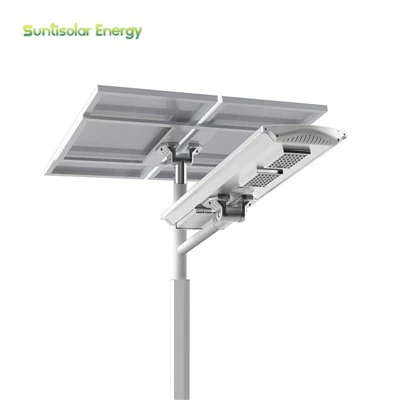
The self-cleaning function is a game-changer in the world of solar street lights. By keeping the solar panels clean, it improves the efficiency, extends the lifespan, and reduces the maintenance costs of the solar street lights. As a supplier of self-cleaning solar street lights, we are committed to providing our customers with the highest quality products and the latest technology.
Self-cleaning Solar Street Light If you’re interested in learning more about our self-cleaning solar street lights or would like to discuss a potential project, please don’t hesitate to contact us. We’d be happy to answer any questions you may have and provide you with a free quote.
References
- "The Impact of Soiling on Photovoltaic Systems: A Review" by M. S. Al-Dallal et al.
- "Self-Cleaning Coatings for Solar Panels: A Review" by R. K. Singh et al.
- "Photocatalytic Self-Cleaning Coatings for Solar Energy Applications" by A. K. Mishra et al.
Yantai Xutai New Energy Technology Co., Ltd.
Yantai Xutai New Energy Technology Co., Ltd. is one of the most professional self-cleaning solar street light manufacturers and suppliers in China. With a professional production team, we are able to meet the needs of the majority of our customers. Please rest assured to buy premium self-cleaning solar street light made in China here from our factory.
Address: No.229, Tongshinan Road, Zhifu District, Yantai City, Shandong Province, China
E-mail: Joe.chu@suntisolar.com
WebSite: https://www.suntisolar.com/
